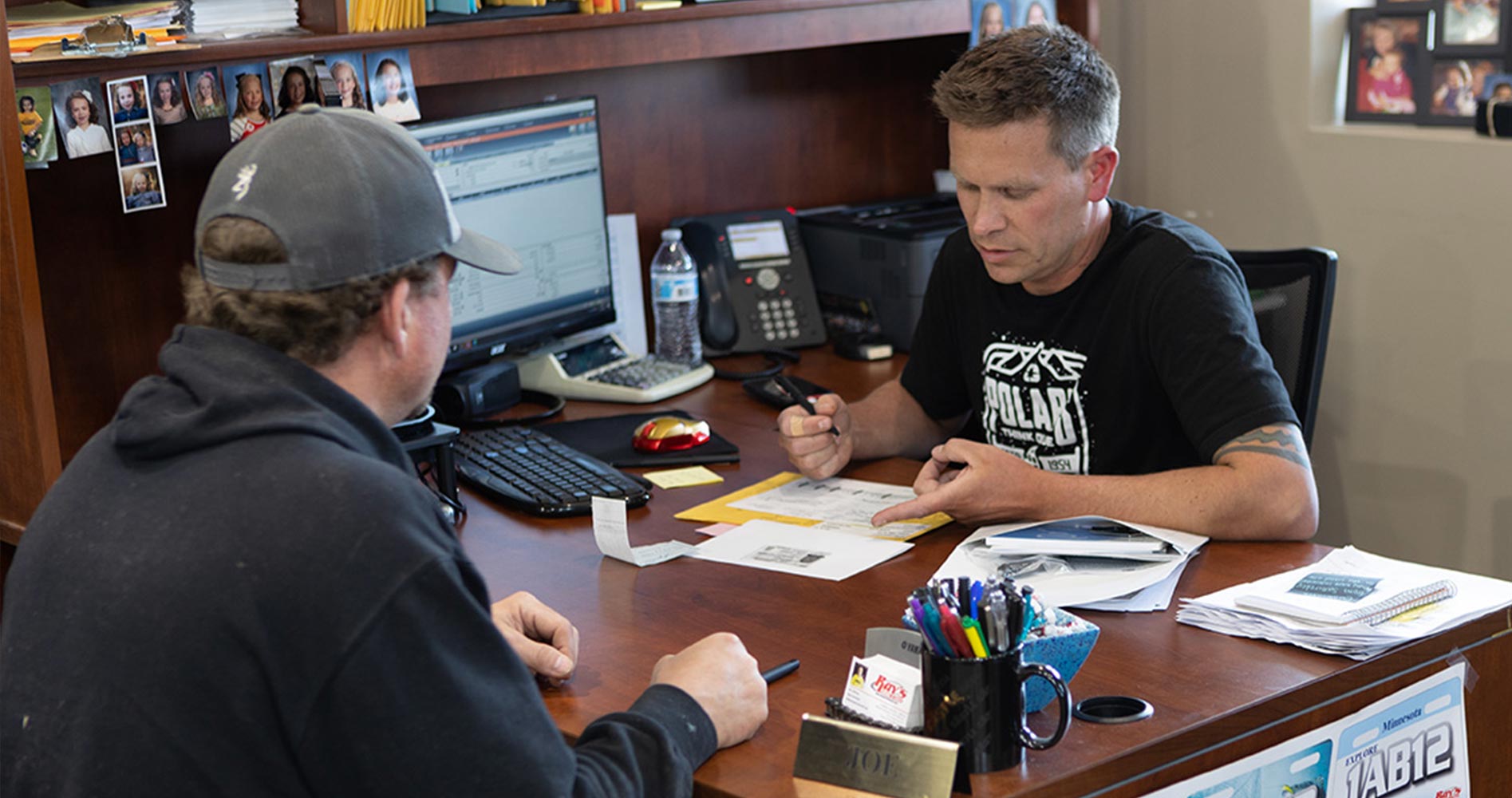
The most effective support happens before a dealer even picks up the phone. Learn about Lightspeed’s “White Glove” proactive support model, where our team monitors account health and case volume to identify and resolve potential dealership challenges before they escalate into critical business disruptions.
Most dealers think of support the same way: something breaks, you call, someone helps you fix it. That’s the transaction. And if it goes well, you hang up satisfied and get back to work.
That’s a fine description of reactive support. But it’s only half of what our Customer Support team actually does.
The other half happens before you call and in some cases, before you even know there’s a problem to call about.
What is Lightspeed White Glove Support?
Inside Lightspeed’s support operation, we have a dedicated group we call the White Glove team. Their job isn’t to answer incoming calls. They’re essentially looking out for you before you even know you need a hand.
The way it works: the team monitors case volume across the dealer base. When a dealership starts generating an unusually high number of cases in a short window, especially if you’re a new partner still finding your footing, that shows up on White Glove’s dashboard. And instead of waiting for things to escalate, someone from the team picks up the phone and calls.
No ticket required. No dealer hitting a wall and getting frustrated and finally escalating. Just a proactive reach-out: “Hey, we’re seeing some activity on your account. Let’s get ahead of this together.”
It’s a small operational detail that makes a significant practical difference. The dealers who get that call often don’t realize how much worse things could have gotten if nobody had noticed.
If Something Goes Wrong Company-Wide, We Move Fast
Proactive support isn’t just about individual dealers. When something happens that affects a broader portion of the customer base, the team moves to get in front of it fast.
One recent example: a billing error resulted in incorrect invoices going out to a large number of dealers. The support team’s response wasn’t to wait for calls to flood in. They went outbound, working through nearly the entire affected customer base in a single day. Dealer by dealer, call by call: here’s what happened, here’s what it means for you, here’s what we’re doing about it.
By the time most dealers even had a chance to notice the problem, someone from Lightspeed had already called to explain it.
The same instinct drives another feature of the phone system itself. When a known issue is affecting a significant number of dealers, the first thing you’ll hear isn’t elevator music; it’s a message of the day that explains what’s happening and what to expect. That’s not an accident. It’s a deliberate design choice to cut down on the time dealers spend confused or waiting for information that should have reached them already.
“We want to minimize how much time a dealership is either suffering or wasting time waiting around,” says Tex Orozco, Lightspeed’s VP and head of Customer Support. “That’s the worst thing in the world — having to wait.”
The Polaris and Indian Story
Sometimes proactive support requires real coordination work across a large group of dealers, all at once.
When Polaris sold off its Indian Motorcycle division, creating two separate companies out of what had been one, it created some immediate operational challenges for the dealers who carried both lines; price books, system setups, account structures—all of it needed to be sorted out quickly and correctly, or dealers would be left trying to figure it out themselves mid-season.
The Customer Support team didn’t wait for those dealers to start calling with problems. Kayleigh, our Executive Admin and the heart of support, coordinated a proactive outreach campaign, working through the affected dealer base and making sure each one got on the right price books and had their systems set up correctly before it became an issue.
It’s the kind of behind-the-scenes work that rarely gets acknowledged partly because when it works, nothing goes wrong, and nobody ever knows what could have been.
What the Ops Team Does With Data
Jay Reimann leads Lightspeed’s Strategic Support Operations team, and one of the tools his group uses regularly is SQL Runner, which gives them a way to query the dealer database and surface trends that aren’t visible from any single support call.
The idea is to look across the full dealer base and ask: where are the recurring pain points? What patterns show up in the data that individual agents wouldn’t see from their own call volume? And what can be done about those patterns before they become a wave of support tickets?
It’s the kind of thinking that sits at the intersection of support and product and it’s led directly to changes in how Lightspeed builds and releases software.
“We go run queries across the dealer base to understand the pain points they’re running into,” Jay says. “That feeds communication back to other departments.”
Which brings up another thing most dealers don’t know about.
Why Our Support Team Are the Ultimate Gatekeepers
Before any major software update goes out to the full dealer base, it goes through an Early Access Program where a group of dealers test for us, in real-world conditions and report back what they find.
The support team is deeply involved in that process. When EAP dealers surface real problems, the support team documents them, escalates them, and doesn’t let them get buried. And if the feedback says the release isn’t ready, the team says so clearly and persistently, until the engineering side addresses it.
That’s not how it always worked. There was a time when products went out when they were scheduled to go out, and support dealt with whatever the result. That dynamic has changed.
A significant release was pulled back entirely after EAP feedback revealed serious issues. The team worked with every affected dealer individually, documented the problems in detail, and sent it all back to the product team. The redesign took more than a year and a half. When it eventually released, it was a fundamentally different product because the support team refused to let a broken version go out to the full dealer base.
“We’re bulldogs,” Tex says. “We don’t want something hitting customers that’s going to cause them pain. We have a floor full of people who make sure our customers suffer as little as possible.”
What to Do With All of This
Most dealers have no idea any of it is happening behind the scenes.
They know what they see: they call, someone answers fast, the issue gets resolved. What they don’t see is the dashboard monitoring their case volume, the outbound call campaigns ahead of industry changes, the data queries looking for patterns across thousands of accounts, and the product fights happening behind the scenes to protect them.
All of that is part of what you’re getting when you’re a Lightspeed dealer.
And if you’re not getting as much value as you could be—if there’s something in the system you don’t fully understand, a workflow that feels harder than it should, or a staff turnover situation that’s created gaps in how your team uses the software—don’t wait for the problem to get worse. Call us.
The team that monitors your account and fights your product battles behind the scenes is also the team that picks up in under two minutes. Just reach out.
Don’t wait for a problem to surface. If something feels off with your system or your setup, Contact Support— that’s exactly what we’re here for.

Lightspeed
Lightspeed is a leading provider of cloud-based software for dealerships and Original Equipment Manufacturers (“OEMs”), serving the Powersport, Marine, RV, Trailer, Outdoor Power Equipment, and Golf Car industries. Lightspeed’s Dealer Management Solution (DMS) enables dealerships to optimize their end-to-end business operations, including sales, parts, service, rental, accounting, and CRM. When implemented into their daily operations, Lightspeed helps dealers increase their profitability by selling more units, service, and parts, all while creating a more streamlined experience for customers. For more than 40 years, Lightspeed has been empowering 4,500+ dealers across North America with the tools and technology they need to manage their dealerships. For more information, visit www.lightspeeddms.com.